
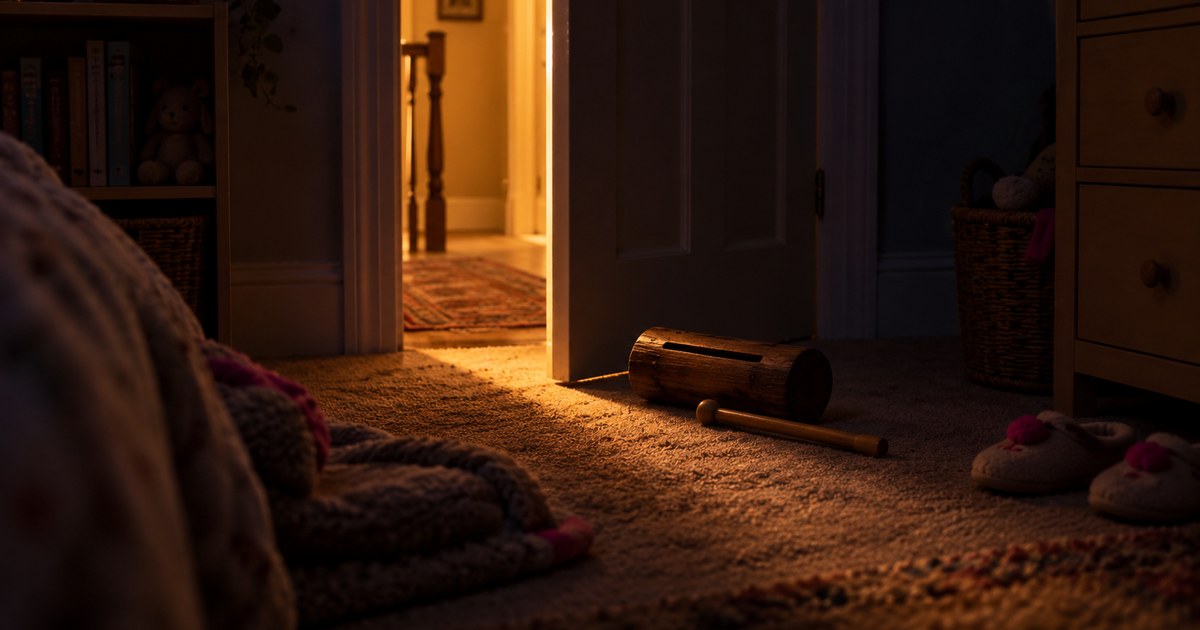
Is Tung Tung Tung Sahur real? No. He is a picture made with an AI image tool by a young Indonesian TikTok creator in February 2025, and the only versions of him you can touch are the toys and stickers in shops. But the drum he is shaped like and the Ramadan meal his name refers to are completely real, which is exactly why children ask.
The short answer for a child: Tung Tung Tung Sahur is made up. Someone typed a description into a computer program, it drew him, and he became famous because the video was funny. The drumbeat in his name is real. In Indonesia, people beat a wooden drum before dawn during Ramadan to wake their neighbors for an early meal, and he is a joke about that drum.
Who made Tung Tung Tung Sahur?
A person, with a computer’s help. Wikipedia names the creator as Fernanda Bagas Indrastata, an Indonesian TikTok user known online as Noxa. On 28 February 2025, the day before Ramadan began in Indonesia, he asked the AI image tool DALL-E to draw a pentungan sahur, the wooden stick used with the drum, with a face and legs. He tried several more descriptions, picked the image he liked best and posted it. Know Your Meme records that first video passing 31 million views in a month.
In comments his representatives passed to Agence France-Presse, Noxa said the character was inspired by the sound of the sahur drum he used to hear, and that he wanted the character to have meaning rather than be just another passing joke. That is a useful thing to tell a child: a real person made him on purpose, from a real memory.
What part of Tung Tung Tung Sahur is real?
Three things, and they are worth explaining because they are genuinely interesting.
The drum is real. Wikipedia describes him as an anthropomorphic kentongan, a traditional Indonesian slit drum, the kind used during Ramadan as a wake-up call. The meal is real too. Sahur is the meal Muslims eat before dawn during the fasting month, and Wikipedia records that communities across Southeast Asia have long used drumming and other noise to wake people for it. And the phrase is real. Know Your Meme finds the same sahur and tung tung chant in a tweet from July 2013, long before any AI image existed. Tung tung is simply the sound the drum makes.
So the honest answer has two halves. The character is invented. The tradition he is built on is old, real and belongs to a lot of people, which is a good reason to talk about it kindly. Our post on what Tung Tung Tung Sahur means goes through the drum, the meal and the name in more detail.
Why does my child think he might be real?
Mostly because the original video plays him as a spooky character. The voiceover is in Indonesian and is written like a mock warning, the kind of thing an older cousin says to make a little one get up on time, and it ties him to the pre-dawn call. We describe that rather than reproduce it. Most children in the United States never understood the words, but the spooky framing traveled with the character into the remixes and fan videos that followed, and a seven-year-old cannot always tell a joke dressed as a scary story from a scary story.
Even in Indonesia the scare was a joke. Know Your Meme records that near the end of Ramadan in March 2025, Indonesian users posted jokes about him going back to his homeland, having finished his mission of scaring everyone into getting up for sahur.
There is also a reason this happens with very young children in particular. Wikipedia cites Muhammad Faisal of the Indonesian think tank Youth Laboratory Indonesia, who argued in the newspaper Kompas that children now meet characters like this through social media and online games, without a parent watching alongside them, which is different from cartoons on a family television. A child who met him alone, in a clip with no context, has nobody there to say it is a joke. That is the job left for the adult.
Is it normal for a child to ask if he is real?
Yes, and parents in other countries are dealing with the same question. Agence France-Presse spoke to Nurina, an NGO worker in Indonesia whose seven-year-old son shouts character names at her when she picks him up from school. She said she knows it is fun to watch, and that she just needs to make him understand that it is not real. The same report notes that one 12-year-old visitor in Tokyo thought Tung Tung Tung Sahur was a baseball bat, which is a fair reminder that most children take very little meaning from these characters at all.
The thing worth watching is not the character himself but where a child finds him. AFP quotes a clinical psychologist in Jakarta, Oriza Sativa, who warned that some videos place these characters in content made for adults. Our parent guide to Italian brainrot covers that calmly and in more depth.
Where else does he show up in real life?
Places a child may well point him out, which can make him feel more real than he is. Wikipedia records a Tung Tung Tung Sahur outfit added to Fortnite in April 2026, and in East Java it shows a police rest post themed on him, used to encourage families driving home for the mudik holiday to stop and rest. AFP describes a shop in Japan with a rack of toys, stickers and keyrings of the characters.
None of that makes him real. It makes him popular, and children are good at understanding the difference once someone points it out: a statue of a cartoon character does not mean the cartoon character lives somewhere. The Tung Tung Tung Sahur character page has the reference entry, and our post on Indonesian brainrot explains why he is not Italian at all.
What should I actually say?
Something short and true. He is a made-up picture that a young man in Indonesia made with a computer. The drum is real, and so is the early breakfast during Ramadan that it wakes people up for. The scary voice is a joke, the same way a grown-up might pretend a sock monster eats socks. If a video of him ever feels frightening, that video was made by someone trying to scare people, and you can just turn it off.
The Guardian, explaining the whole trend to adults, put the appeal simply: it is not offensive or subversive so much as silly. Most children who ask whether he is real are relieved to hear he is not, and then go straight back to doing the drumbeat at the dinner table.
Italian Brainrot Sounds is a free soundboard for iPhone, rated 4+, with characters like Ballerina Cappuccina and Chimpanzini Bananini on big picture tiles.
Sources
- Tung Tung Tung Sahur, Wikipedia
- Know Your Meme: Tung Tung Tung Sahur
- Italian Brainrot: Tung Tung Tung Sahur, AI memes only Gen Z, Gen Alpha know, Agence France-Presse, 10 August 2025
- From Chimpanzini Bananini to Ballerina Cappuccina: how gen alpha went wild for Italian brain rot animals, Elle Hunt, The Guardian, 25 June 2025